Offender Locator
- 2.3
- Rating
- 100.00K
- Installs
- Free
- Price

 Analysis by App-foxy
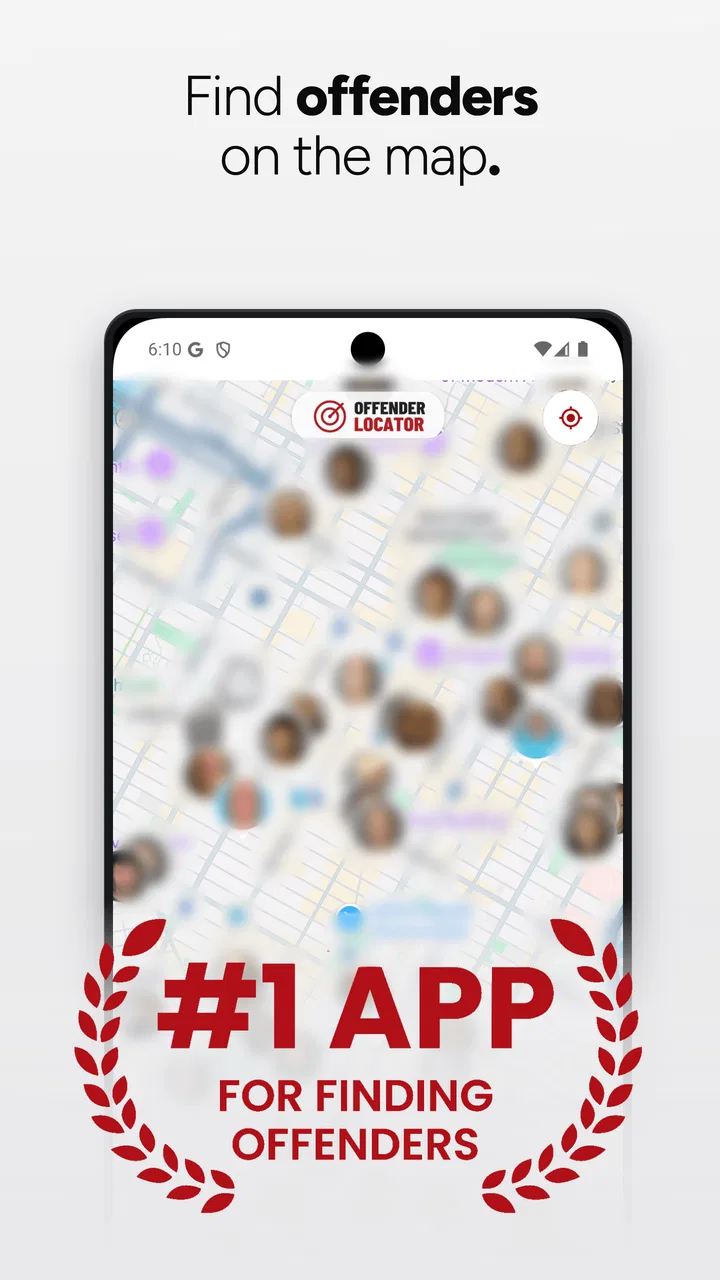
When I first opened Offender Locator, I understood its appeal immediately: it is a lifestyle app built around checking registered sex offenders connected with an area or a location you choose. That can be useful when moving to a new neighborhood, planning a route, or simply trying to understand the surroundings of a home, school, workplace, or family member. At the same time, this is not an app I would treat as a complete safety service. Its information needs careful interpretation, and the relatively low average rating of 2.3 from over 400 ratings suggests that the experience has not worked smoothly for everyone.
The app comes from Offender Locator Inc. and is free to install, which makes trying it fairly easy. It is rated for Everyone, runs on devices using Android 8.0 or later, and has passed the 100K-plus install mark. The current release is version 13.0.1. There are optional in-app purchases priced from about $20 to $50 per item, so I would pay attention before confirming anything beyond the basic free experience.
How Offender Locator feels in everyday use
I find the app most useful when I approach it with one clear question and a specific place in mind, rather than browsing broadly and drawing quick conclusions. That focused habit helps me keep searches distinct and makes the results easier to follow up responsibly. The next section looks at the practical checks I would make before relying on what appears.
You May Also Like

 Blood Strike: 2.5 Anniversary
Blood Strike’s Loadouts Turn Every Drop Into a Tactical Gamble
A close look at Blood Strike’s custom loadouts: how fast access to signature weapons reshapes its battle royale rhythm, rewards preparation, and narrows the gap between fights.

 Pandora - Music & Podcasts
Pandora’s Music Is Easy to Start, but Harder to Recover
Pandora’s strength is its low-effort path from a seed to a station. Its weak spot is how much confidence it asks you to place in connection, setup, and quiet recovery.

 8 Ball Pool
 Is Built on Rivalries, Rematches, and Routine
A close look at the rivalries, rematches, shared routines, and unanswered safety questions that turn a quick pool match into a persistent mobile community.

 Samsung Music
’s Quiet Strength Is Playing What You Already Own
Its reach comes less from spectacle than from dependable access to a personal library. That simplicity is both the app’s strongest retention engine and its ceiling.

 AccuWeather: Weather Radar
AccuWeather Review: A Quick, Clear Forecast for Everyday Decisions
For everyday plans, the best forecast is the one you can understand quickly. AccuWeather makes rain timing, radar, and local conditions easy to act on, with a few trade-offs.

 Hill Climb Racing
Why Hill Climb Racing Still Turns Crashes Into One More Run
A tiny car, a bumpy hill and one more upgrade: Hill Climb Racing keeps resurfacing because its simple chaos makes every near-miss feel personal.
More From Our News Desk
View All News


Speed expectations when checking an area
The main task is straightforward in concept: choose or view a location and look for registered offenders associated with that area. I found that the usefulness of the app depends less on flashy presentation and more on how quickly I can get from opening it to understanding what is nearby. For a quick check before visiting an unfamiliar neighborhood, that direct purpose is more valuable than a long list of unrelated lifestyle tools.
There is an important difference between a fast result and a useful result, though. A map or location-based search can give an immediate impression, but I would not make a serious decision from a glance at a marker or name alone. I would first confirm the location, read the available details carefully, and consider whether the result actually relates to the exact place I am investigating. The app is best used as a starting point for awareness, not as a one-tap verdict on a neighborhood.
One practical habit makes the experience more dependable: search one area at a time instead of repeatedly jumping between distant places. If I were comparing two potential apartments, I would check each address separately, note what appears, and then return to the first search rather than assuming the last visible screen still represents the original location. This reduces the chance of confusing results from different places.
I would also avoid treating an empty-looking result as proof that an area has no risk. Location services, search boundaries, records, and update timing can all affect what an app displays. That is a general caution, but it matters especially here because the subject is sensitive and a false sense of certainty could be more harmful than a slow loading screen.
What happens during heavier use
Offender Locator makes the most sense for occasional checks, not for continuous monitoring throughout the day. A person might open it while researching a move, checking a route for children, or reviewing the surroundings of a temporary rental. Those are short sessions with a clear question. I would not expect it to replace a broader research process involving local public resources, direct conversations, and common-sense observation.
Heavier use can also mean repeated searches rather than long sessions. For example, imagine I am helping a relative choose between three homes. I might check each location, zoom or move around the surrounding area, revisit the results, and compare what I have seen. That workflow is more demanding than a single lookup because it requires keeping track of several places without mixing them up. My advice would be to write down the addresses and the date of each check, then repeat the searches later if the decision is important.
This is one of the less obvious trade-offs of the app: convenience can encourage overconfidence. Because the search is packaged into a phone app, it may feel more complete than it really is. I would use it to raise questions, such as whether I should investigate a particular block or contact an official source, rather than to settle those questions by itself.
Another useful approach is to separate “where is the result?” from “what does the result mean?” First, identify the location shown by the app. Then, independently consider the context, accuracy, and relevance. Keeping those steps separate helps prevent a pin, label, or search result from becoming an emotional shortcut.
Reliability and the importance of verification
Reliability here has two sides. The first is technical: can the app open, accept a location, and present information in a way that I can follow? The second is informational: can I safely assume that every result is current, complete, and perfectly matched to the place I selected? I would be comfortable using the app for an initial look, but I would not rely on it as the only source for a housing, childcare, travel, or family-safety decision.
The rating history reinforces that cautious approach. An average of 2.3 across more than 400 ratings is not a strong confidence signal for a tool that people may open during serious decisions. Ratings do not explain every individual problem, and they do not automatically prove that the app is unusable, but they are enough for me to recommend testing the free experience before considering any purchase.
For an important check, I would compare what I see with official local or state resources whenever those are available. That is not redundant. An app can be convenient for viewing a location, while an official source may provide the authoritative context needed to interpret a record. If the two do not appear to agree, I would trust neither assumption blindly; I would investigate the discrepancy before acting.
Privacy and sensitivity also affect how I use it. I would avoid casually sharing screenshots containing names or locations, especially in group chats or social networks. A result may concern a real person and a real address, so the responsible workflow is private review, careful verification, and no public speculation. That is a user habit rather than an app feature, but it is essential for this particular category.
Device constraints and practical friction
The minimum operating system requirement is Android 8.0, so people using older Android phones may not be able to install the current version. For supported devices, I would still keep expectations modest. This is a focused lookup tool, not an app I would install for entertainment or leave open constantly. If phone storage, battery, or mobile data is limited, I would reserve it for deliberate searches instead of repeated browsing.
A larger constraint is the difference between free access and optional paid items. The app costs nothing to install, but in-app purchases range from about $20 to $50 per item. That is a meaningful amount for a lifestyle utility, particularly when the public or official alternatives in this area may be available without the same purchase structure. I would not buy anything until I knew exactly what the item unlocks and whether it provides information I genuinely need.
This is also where the app may be a poor fit for some users. If I only need one occasional neighborhood check, paying a substantial amount may not make sense. If I need a formal background check, legal documentation, or the most authoritative current record, I would look elsewhere. If I am uncomfortable handling sensitive personal information on a third-party app, I would skip it and use official channels directly.
On the other hand, the phone format has a practical advantage. When I am away from home and need to examine a location quickly, having a dedicated search tool can be more convenient than navigating several government pages on a small screen. That convenience is the strongest argument for keeping it installed, provided I remember that convenience is not the same as authority.
Who will get the most value from it?
I think Offender Locator is most useful for people who want a quick first look at an unfamiliar area. A parent could use it while considering a new neighborhood, a renter could check the surroundings of a prospective home, and a traveler could review a location before booking or arriving. In each case, the app can help turn a vague concern into a more specific question for further research.
It may also help someone organizing a move. My preferred workflow would be to check several candidate addresses, keep the searches separate, and then verify any notable result through an official source. I would not use one search as a reason to reject a home automatically, because proximity alone does not explain circumstances, timing, or the full context of a record.
I would recommend skipping it if the goal is instant reassurance. The app cannot responsibly promise that a location is completely safe, and a user who wants a definitive answer may misread what a location search can establish. I would also skip it if the purchase options feel unclear or too expensive for the occasional value I need.
How it compares with the usual alternatives
The usual alternative is to search official public registries directly. Those sites can be less convenient on a phone, but they may be the better choice when accuracy, source authority, and detailed context matter more than speed. Offender Locator has the advantage of putting the initial location check into a simpler mobile workflow, while official resources are the place I would go for confirmation.
Another alternative is ordinary map research: looking at the neighborhood, checking transport routes, reading local information, and visiting the area in person. That approach answers questions this app cannot, such as lighting, foot traffic, access to services, and how comfortable the surroundings feel at different times. The app should complement that research rather than replace it.
Paid background-check services are a different category again. They may be designed around people, employment, or formal screening rather than a quick neighborhood view. I would not assume Offender Locator can perform the same job. Choosing between them depends on the question I am asking: location awareness is one task, a formal background investigation is another.
My performance verdict
My overall view is mixed but practical. Offender Locator has a clear purpose and can be useful when I need a quick location-based starting point. Its free entry point and support for Android 8.0 and newer make it accessible to many users, while the 100K-plus install figure shows that it has reached a substantial audience. Still, the low average rating, the sensitive nature of the information, and the optional purchases from roughly $20 to $50 mean I would approach it carefully.
I would install it for occasional preliminary checks, especially before researching a move or visiting an unfamiliar area. I would keep my searches organized, avoid sharing sensitive results, and verify important findings through official sources. I would not use it for constant monitoring, formal screening, or emotional reassurance.
The most important takeaway is to treat the app as a research prompt, not a final authority. Used that way, it can save time and point me toward questions worth investigating. Used as a complete safety judgment, it creates more confidence than the format can justify.
For my own recommendation, I would try the free experience first and decide whether its workflow is clear enough for my needs. I would be especially cautious before buying an in-app item, because the cost is high enough to deserve a specific reason. If I needed only a single authoritative check, I would probably choose an official registry instead. If I wanted a convenient mobile starting point and understood its limits, Offender Locator could still earn a place among my occasional location-safety tools.
In short, this is a focused lifestyle app with a useful idea, but not one I would use casually or blindly. Its value comes from helping me begin a careful investigation; its weakness is that the simplicity of the search can make a complicated subject look settled too quickly. That balance is what should guide the download decision.
FAQs for Offender Locator
01What is Offender Locator and what information does it provide?
Offender Locator is designed to help users search publicly available offender-registration information, usually by entering a name, location, or other identifying details. Depending on the jurisdiction covered, results may include an individual’s registered address, offense category, registration status, and profile photograph. The available information can vary significantly by country, state, or local authority, so users should always verify important details with official government sources.
02Is Offender Locator available in every country or region?
No. The usefulness of Offender Locator depends on the public records and databases supported by the app. Coverage may be limited to selected regions, particularly areas where offender information is legally published online. Before downloading, check whether your state or country is supported and whether the database is updated regularly. Search results may be incomplete if local authorities do not share records or if registration rules differ between jurisdictions.
03How accurate and up to date are the results in Offender Locator?
The app generally relies on publicly available records, meaning the accuracy and freshness of its information depend on the agencies supplying those records. Some profiles may be updated frequently, while others could contain outdated addresses, missing photographs, or delayed status changes. Treat the app as a convenient search tool rather than an official source, and confirm any serious concern directly through the relevant law-enforcement or government website.
04Can Offender Locator be used to track or monitor a person in real time?
Offender Locator should not be understood as a real-time tracking application. It typically displays registered public-record information and does not provide live GPS monitoring, private communications, or continuous movement updates. Information shown in a profile may reflect a previously reported address or registration entry. Users should avoid attempting to confront, threaten, or harass anyone based on an app result, and should contact authorities if they have a legitimate safety concern.
05Is Offender Locator free, and what privacy considerations should users know about?
The app may be free to download, but certain features, searches, advertisements, or subscription options can vary depending on the platform and version. Review the store listing carefully before accepting a purchase or trial. You should also examine the privacy policy to understand whether search activity, location data, or device information is collected. Use the app responsibly, avoid unnecessary personal searches, and remember that public information must not be misused or redistributed improperly.
Pros
- Helps users check offender information by location.
- Search results can support personal safety planning.
- Useful for families
- travelers
- and new residents.
- Simple concept makes the app easy to understand.
- May provide quick access to publicly available records.
Cons
- Coverage and data accuracy may vary by region.
- Some records may be delayed or missing.
- Requires location access for location-based searches.
- Search results can be confusing without legal context.
- Availability and features may differ between Android and iOS.

Offender Locator
Gallery